How to Patch a Hole in Drywall - and When to Call a Professional
Learn which drywall holes are easy DIY repairs, which patch method to use, and when water damage, texture, wiring, or a rated wall needs a professional.
Choose the repair by the damage
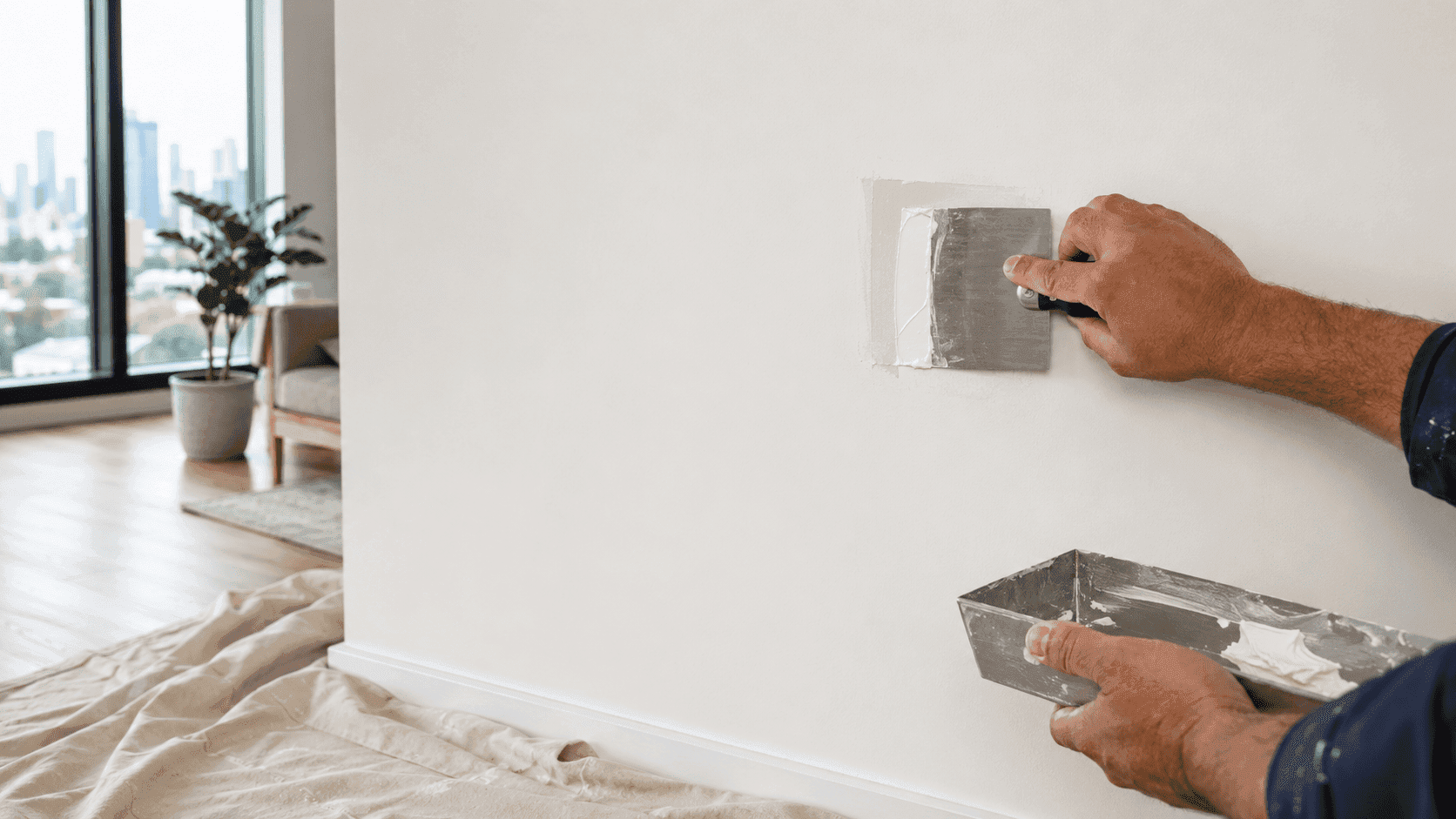
Some drywall holes are easy cosmetic repairs. Others need backing, a fitted drywall piece, texture matching, or investigation before the wall can be closed. The right method depends on the hole size, the surrounding drywall, and the cause.
| Damage | Typical repair |
|---|---|
| Nail or pin hole | Patching compound, light sanding, primer if needed, paint |
| Screw or anchor hole | Remove the anchor and loose paper; fill in thin coats |
| Dent or torn face paper | Remove loose material, stabilize the surface, skim, prime, paint |
| Opening up to about 6 x 6 in. | Mesh patch or carefully fitted paper-faced California patch, when appropriate |
| Larger or unsupported opening | Cut back to solid drywall and install a supported drywall piece |
| Soft, swollen, wet, stained, or recurring damage | Find the cause first; damaged board may need replacement |
Before you patch: identify the wall and the cause
Confirm that the surface is drywall, not plaster, cement board, masonry, or wood paneling. Los Angeles homes commonly include older plaster and metal-lath walls that require a different repair method.
Then ask why the hole exists. A clean picture-hook hole is different from:
- damage from a failed TV mount or shelf
- a crack that keeps reopening
- a plumbing or roof leak
- a soft or swollen wall
- an opening near wiring, plumbing, HVAC, or a fireplace
Do not close the wall until moisture or movement has been corrected. The EPA's core guidance is to control moisture first; wet or mold-affected porous material may need removal instead of a cosmetic skim coat.
A simple six-step repair process
1. Remove loose material
Take out plastic anchors, broken gypsum, peeling face paper, and anything that no longer bonds firmly to the wall. Keep the repair as small as possible, but leave clean edges and solid surrounding board.
2. Select the correct patch
Very small holes can usually be filled directly. A larger opening needs a patch, backing strips, repair clips, or a fitted drywall piece.
USG describes a paper-faced California patch for some openings approximately 6 x 6 inches or smaller. It uses a fitted drywall center with an intact paper flange and still requires careful fitting and finishing.
3. Apply compound in thin coats
Do not pack a deep hole with one heavy mass of filler. Apply controlled coats, follow the product's drying or setting time, and extend each coat slightly farther to blend the patch into the wall.
4. Sand lightly
Sand only when the compound is ready. Use light pressure; aggressive sanding can expose the patch or damage the surrounding paper. Remove dust before the next coat or primer.
5. Match the texture
Orange peel, knockdown, skip-trowel, sand texture, and hand-applied finishes are not interchangeable. Test the texture on scrap material first when possible.
A solid patch can still look unfinished when its pattern or edge transition does not match, especially under side lighting.
6. Prime, then paint
Joint compound and exposed paper absorb paint differently. Primer reduces visible flashing. If the sheen, color, roller texture, or paint age differs, painting from corner to corner may look cleaner than a small touch-up.
When to call a professional
Professional assessment makes sense when:
- the opening is large, irregular, on a corner, ceiling, or existing seam
- the drywall is soft, swollen, stained, wet, or has mold-like growth
- a crack or previous patch keeps reopening
- the wall is plaster, metal lath, masonry, or a layered assembly
- wiring, plumbing, HVAC, blocking, or another obstruction may be behind the repair
- the wall has a difficult texture or high-visibility paint finish
- the damage came from a failed mount and the new item must be reinstalled
- the opening is in a fire- or sound-rated wall or ceiling
An ordinary cosmetic patch may not preserve a fire or sound rating because panel type, thickness, fasteners, joints, and sealants can all matter.
Common mistakes
- Filling over a plastic anchor instead of removing it.
- Painting directly over loose or torn paper.
- Using one thick coat or sanding too soon.
- Leaving a raised edge or skipping primer.
- Treating plaster as ordinary drywall.
- Closing the wall before correcting moisture or movement.
Need drywall repair in Los Angeles?
DrillWorks handles minor drywall holes, anchor damage, mounting-related repairs, and move-out wall touch-ups across Los Angeles.
Send clear photos, approximate dimensions, the wall location, and what caused the damage for an initial scope review.
Frequently Asked Questions
Can I fill a drywall hole with spackle only?
Small nail holes and minor anchor holes may be suitable for patching compound. A deep or unsupported opening usually needs a proper patch rather than a large mass of filler.
How many coats does a drywall patch need?
It depends on the depth, patch method, compound, and desired finish. Multiple thin coats usually create a flatter repair than one heavy coat.
Why can I still see the patch after painting?
The edge may be raised, the texture or sheen may differ, the compound may not have been primed, or the existing paint may have aged.
Can drywall be repaired after water damage?
Only after the moisture source is corrected and the material is assessed. Soft, swollen, contaminated, or weakened drywall may need replacement.
Can I mount something in the same place after a repair?
Do not assume a cosmetic patch restores load capacity. A TV, shelf, mirror, or other mounted item needs an attachment method based on the framing, wall type, item weight, and condition of the repaired area.